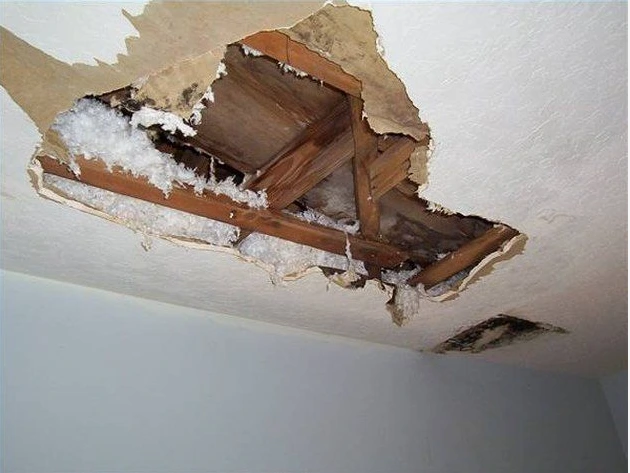
A water stain on the ceiling sounds like one of those problems you can let slide until the paint begins to bubble, the drywall is sagging, or the mildew has begun to stink. If your home is like most, ceiling water damage repair is more mirage than real, as while the top can be repaired, and even new drywall can be painted.
If there is a problem underneath, it will come back. You can learn more by taking a closer look at our Drywall Repair services. Also, if doing it right the first time matters to you, then stop by PMPD Drywall, where we repair drywall ceilings in Englewood and Denver (as well as Lakewood and other towns across the Colorado Front Range).
This is what it actually goes like. From the minute you discover that there are damages to a completely restored ceiling.
Step 1: Turn Off The Tap Before You Hit the Roof
That sounds obvious, but it is more frequently missed than you would believe. Applying new plaster to a ceiling while water continues to seep slowly through a plumbing leak or failed roof membrane, or condensation above, will quickly ruin the work.
In many cases, ceiling leaks in Colorado homes could occur as a result of roof damage induced by hail or heavy snow, the formation of ice dams along eaves during Winter, plumbing supply line or drain leaks from an upstairs bathroom, or HVAC condensate line overflows.
Prior to such drywall work occurring, the origin must be located and corrected, whether that means a plumber, a roofer, or an HVAC technician.
Step 2: Dry the Area Thoroughly
Wet drywall can’t be patched. Installing moisture-retentive material or coating on top of a wet substrate acts like a spongy maidservant by encasing the soaked wall cavity with moisture, precisely the mold-friendly conditions you have tried to avert.
Due to the arid climate in Colorado, wet ceiling drywall that is wet dries out more quickly than it would in areas of high humidity. Before any structural repair work is commenced, check beneath with a moisture meter to ascertain that the roof and framing above are all free from moisture.
Step 3: Assessment of the Area
Ceiling water damage does not always appear the same way. Surface staining of an area with solid drywall underneath is a very different repair from an area on the ceiling that has softened and crumbled.
Lightly dab the contaminated area. If it is hard and the paper face is still intact, then a surface repair may do the job well enough. The same applies when a board feels soft or springy underfoot, or might be bulging; the board must be cut out and replaced.
Step 4: Remove, Insert, and Tape
For those areas that need to be replaced, each side of the damaged drywall is cut back to its nearest joist in order to have a clean edge that will be supported by the new board. In effect, a new piece is cut to size and attached to the joists with drywall screws, but it’s also taped at each seam using either mesh or paper tape and joint compound.
Each coat of compound takes more than one application; typically, the ceiling is feathered out well beyond the edges of any repair. Incorrect building up or blending of the compound commonly leads to patch edges showing through when painted.
Step 5: Primer, And Then Paint
And if you do not first prime those water-damaged areas with a stain-blocking primer, the stains will almost always bleed through standard paint. Even plasterboard that appears dry and intact will show brownish stains through the topcoat within days.
A ceiling will be painted to tie in with a colour scheme after priming. Texture matching is an added step that requires finesse, especially on textured ceilings (the kind you see in many Colorado homes built in the 1980s and 1990s). DIY result: obvious texture mismatch on an otherwise repaired ceiling.
FAQS
Can you paint over a water-stained ceiling without replacing the drywall?
The answer is yes. As long as the drywall is sound and completely dry, you need to prime with a stain-blocking primer first (not standard paint). The stain almost always comes back in the topcoat within days of letting a primer skip.
Does the ceiling drywall dry quickly when there is a leak in Colorado’s dry climate?
That helps in relative humid climates, but it is no assurance of rapid drying. Insulation above the ceiling is holding moisture for longer periods than the surface shows.
How can I tell if there is mold in the ceiling following a roof leak?
Things like the presence of dark spots, a growing musty smell after the leak has been repaired, or drywall that remains soft long after the roof has been repaired are all signs to be watchful for.
My ceiling has a popcorn or knockdown texture. Can that be matched after a repair?
Yes, but it requires practice. Knockdown texture is especially found in a great deal of the homes within the Colorado area, and being able to complement the existing texture may be one of many more talent-dependent components to your ceiling restoration.
Will homeowners’ insurance cover ceiling drywall repair after a water leak in Colorado?
It depends on the cause. It also generally covers sudden and accidental damage, such as a burst pipe, for example. Take photos of the damage before any repairs or work is done, and call your insurance agent before starting any work.